Berbamina
 | ||||||||||||||||||||||||||||||||||||||||||||
| Ogólne informacje | ||||||||||||||||||||||||||||||||||||||||||||
| Wzór sumaryczny |
C37H40N2O6 | |||||||||||||||||||||||||||||||||||||||||||
|---|---|---|---|---|---|---|---|---|---|---|---|---|---|---|---|---|---|---|---|---|---|---|---|---|---|---|---|---|---|---|---|---|---|---|---|---|---|---|---|---|---|---|---|---|
| Masa molowa |
608,72 g/mol | |||||||||||||||||||||||||||||||||||||||||||
| Wygląd |
ciało stałe | |||||||||||||||||||||||||||||||||||||||||||
| Identyfikacja | ||||||||||||||||||||||||||||||||||||||||||||
| Numer CAS |
478-61-5 | |||||||||||||||||||||||||||||||||||||||||||
| PubChem | ||||||||||||||||||||||||||||||||||||||||||||
| DrugBank | ||||||||||||||||||||||||||||||||||||||||||||
| ||||||||||||||||||||||||||||||||||||||||||||
| ||||||||||||||||||||||||||||||||||||||||||||
| ||||||||||||||||||||||||||||||||||||||||||||
| Jeżeli nie podano inaczej, dane dotyczą stanu standardowego (25 °C, 1000 hPa) | ||||||||||||||||||||||||||||||||||||||||||||


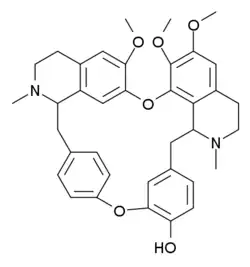
Berbamina — organiczny związek chemiczny, izochinolinowy alkaloid pochodzenia roślinnego, należący do klasy protoberberyn.
Występuje m.in. w berberysie (2,5%)[4].
Przypisy
- ↑ Department of Chemistry, The University of Akron: Berbamine. [dostęp 2012-03-22]. (ang.).
- ↑ Berbamina (nr 547190) w katalogu produktów Sigma-Aldrich (Merck). [dostęp 2012-03-22].
- ↑ Berbamine, [w:] ChemIDplus [online], United States National Library of Medicine [dostęp 2012-03-22] (ang.).
- ↑ Mohsen Imanshahidi, Hossein Hosseinzadeh. Pharmacological and therapeutic effects of Berberis vulgaris and its active constituent, berberine. „Phytotherapy Research”. 2008. 22. s. 999-1012. (ang.).