Lemurek
| Cheirogaleus | |||||
| É. Geoffroy Saint-Hilaire, 1812[1] | |||||
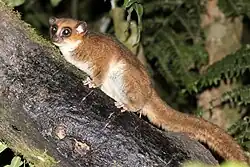 Lemurek większy (Ch. major) | |||||
| Systematyka | |||||
| Domena | |||||
|---|---|---|---|---|---|
| Królestwo | |||||
| Typ | |||||
| Podtyp | |||||
| Gromada | |||||
| Infragromada | |||||
| Rząd | |||||
| Podrząd | |||||
| Rodzina | |||||
| Rodzaj |
lemurek | ||||
| Typ nomenklatoryczny | |||||
|
Cheirogaleus major É. Geoffroy Saint-Hilaire, 1812 | |||||
| |||||
| Gatunki | |||||
| |||||
Lemurek[19] (Cheirogaleus) – rodzaj ssaków z rodziny lemurkowatych (Cheirogaleidae).
Rozmieszczenie geograficzne
Rodzaj obejmuje gatunki występujące endemicznie na zalesionych obszarach Madagaskaru[20][21][22].
Morfologia
Długość ciała 17–29 cm, ogona 19–28 cm; masa ciała 135–458 g[21].
Systematyka
Rodzaj zdefiniował w 1812 roku francuski przyrodnik Étienne Geoffroy Saint-Hilaire w artykule poświęconym notatkom na temat trzech rysunków komercyjnych przedstawiających nieznany rodzaj zwierząt czworonożnych, opublikowanym w czasopiśmie Annales du Muséum National d’Histoire Naturelle[1]. Geoffroy Saint-Hilaire wymienił trzy gatunki – Cheirogaleus major É. Geoffroy Saint-Hilaire, 1812, Cheirogaleus medius É. Geoffroy Saint-Hilaire, 1812 i Cheirogaleus minor É. Geoffroy Saint-Hilaire, 1812 (= Lemur murinus J.F. Miller, 1777) – nie wskazując gatunku typowego; w ramach późniejszego oznaczenia w 1907 roku amerykański przyrodnik Daniel Giraud Elliot na typ nomenklatoryczny wyznaczył Cheirogaleus major É. Geoffroy Saint-Hilaire, 1812 (lemurek większy)[23].
Etymologia
- Cheirogaleus (Chirogaleus, Chirogaleus, Chirogale, Cheirogalus, Chirogalus, Cheirogale): gr. χειρ kheir, χειρος kheiros ‘dłoń’; γαλεή galeē lub γαλή galē ‘łasica’[24].
- Myspithecus: gr. μυς mus, μυος muos ‘mysz’; πιθηκος pithēkos ‘małpa’[25]. Gatunek typowy (oznaczenie monotypowe): Myspithecus typus F. Cuvier, 1833 (= Cheirogaleus major É. Geoffroy Saint-Hilaire, 1812).
- Cebugale: gr. κήβος kēbos ‘długoogoniasta małpa’; γαλεή galeē lub γαλή galē ‘łasica’[26]. Gatunek typowy (oznaczenie monotypowe): Lemur commersonii Wolf, 1822 (= Cheirogaleus major É. Geoffroy Saint-Hilaire, 1812).
- Mioxicebus (Myoxicebus, Myoxocebus, Mioxocebus): gr. μυωξος muōxos ‘popielica’; κήβος kēbos ‘długoogoniasta małpa’[27]. Gatunek typowy: Lesson wymienił dwa gatunki – Mioxicebus griseus Lesson, 1840 (= Cheirogaleus major É. Geoffroy Saint-Hilaire, 1812) i Mioxicebus rufus Lesson, 1840 (= Galago Demidoff G. Fischer, 1806) – z których gatunkiem typowym jest (późniejsze oznaczenie) Mioxicebus griseus Lesson, 1840 (= Cheirogaleus major É. Geoffroy Saint-Hilaire, 1812)[23].
- Opolemur: gr. οπος opos ‘sok warzywny, roślinny’ (tj. tłusty); rodzaj Lemur Linnaeus, 1758 (lemur)[28]. Gatunek typowy (oznaczenie monotypowe): Cheirogaleus milii É. Geoffroy Saint-Hilaire, 1828 (= Cheirogaleus major É. Geoffroy Saint-Hilaire, 1812).
- Altililemur (Altilemur): łac. altilis ‘tuczony’; rodzaj Lemur Linnaeus, 1758 (lemur)[15]. Gatunek typowy (oryginalne oznaczenie): Cheirogaleus medius É. Geoffroy Saint-Hilaire, 1812.
Podział systematyczny
Do rodzaju należą następujące gatunki[29][30][20][19]:
| Grafika | Gatunek | Autor i rok opisu | Nazwa zwyczajowa[19] | Podgatunki[21][20][30] | Rozmieszczenie geograficzne[21][20][30] | Podstawowe wymiary[21][30][g] | Status IUCN[31] |
|---|---|---|---|---|---|---|---|
| Cheirogaleus sibreei | Forsyth Major, 1896 | lemurek malgaski | gatunek monotypowy | być może ograniczony przez rzekę Onive, rzekę Mangoro, Anjozorobe i korytarz prowadzący do zachodniej części lasu Tsinjoarivo; zakres wysokości: powyżej 1400 m n.p.m. | DC: 20–23 cm DO: 22–26 cm MC: około 272 g |
CR | |
| Cheirogaleus minusculus | Groves, 2000 | lemurek mały | gatunek monotypowy | znany tylko z miejsca typowego w Ambositra, na północ od Fianarantsy | DC: brak danych DO: brak danych MC: brak danych |
NE | |
| Cheirogaleus shethi | Frasier, Lei, McLain, J.M. Taylor, C.A. Bailey, Ginter, Nash, Randriamampionona, Groves, Mittermeier & Louis, 2016 | gatunek monotypowy | od Ankarany na wschód do Bekaraoki | DC: około 16,3 cm DO: około 11,5 cm MC: brak danych |
EN | ||
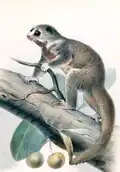 |
Cheirogaleus thomasi | Forsyth Major, 1894 | gatunek monotypowy | od St Luce do Petriky; zakres wysokości: 90–320 m n.p.m. | DC: brak danych DO: brak danych MC: brak danych |
EN | |
 |
Cheirogaleus medius | É. Geoffroy Saint-Hilaire, 1812 | lemurek średni | gatunek monotypowy | od Zombitse na południe do Tsingy de Bemaraha; zakres wysokości: 60–800 m n.p.m. | DC: 17–23 cm DO: 19–27 cm MC: około 135 g |
VU |
|
Cheirogaleus major | É. Geoffroy Saint-Hilaire, 1812 | lemurek większy | gatunek monotypowy | z północnego krańca na południe do okolic Tôlanaro i lasu przybrzeżnego w Mandena; także na środkowym zachodzie (góry Vohimena i Anosy); zakres wysokości: 0–1800 m n.p.m. | DC: 28–29 cm DO: 27–28 cm MC: 314–414 g |
VU |
| Cheirogaleus andysabini | Lei, McLain, Frasier, J.M. Taylor, C.A. Bailey, Engberg, Ginter, Nash, Randriamampionona, Groves, Mittermeier & Louis, 2015 | gatunek monotypowy | Park Narodowy Montagne d’Ambre i obszary wokół Joffreville, na południowy zachód do Irodo | DC: około 26 cm DO: około 28 cm MC: brak danych |
EN | ||
.jpg) |
Cheirogaleus grovesi | McLain, Lei, Frasier, J.M. Taylor, C.A. Bailey, Robertson, Nash, Randriamanana, Mittermeier & Louis, 2017 | gatunek monotypowy | Parki Narodowe Ranomafana i Andringitra oraz otaczające je obszary; prawdopodobnie lokalnie pomiędzy dwoma parkami | DC: brak danych DO: około 29 cm MC: około 45 g |
DD | |
| Cheirogaleus lavasoensis | Thiele, Razafimahatratra & Hapke, 2013 | gatunek monotypowy | południowe zbocza gór Lavasoa | DC: brak danych DO: brak danych MC: brak danych |
EN | ||
.jpg) |
Cheirogaleus crossleyi | A. Grandidier, 1870 | lemurek puszystouchy | gatunek monotypowy | Park Narodowy Marojejy, COMASTA, Makirovana-Tsihomanaomby, Ambohitromby na południe so Ankazomivady, Ankafobe oraz Ambohitantely; zakres wysokości: 0–1800 m n.p.m. | DC: 22–26 cm DO: 21–27 cm MC: 370–458 g |
VU |
Kategorie IUCN: VU – gatunek narażony, EN – gatunek zagrożony, CR – gatunek krytycznie zagrożony, DD – gatunki o nieokreślonym stopniu zagrożenia.
Uwagi
- ↑ Nazwa nieważna, odrzucona do celów nomenklatorycznych decyzją ICZN[2].
- 1 2 3 4 Niepoprawna późniejsza pisownia Cheirogaleus É. Geoffroy Saint-Hilaire, 1812.
- ↑ Nieuzasadniona poprawka Cheirogaleus É. Geoffroy Saint-Hilaire, 1812.
- 1 2 Nieuzasadniona poprawka Mioxicebus Lesson, 1840.
- ↑ Niepoprawna późniejsza pisownia Altililemur Elliot, 1913.
- ↑ Niepoprawna późniejsza pisownia Mioxicebus Lesson, 1840.
- ↑ DC – długość ciała; DO – długość ogona; MC – masa ciała
Przypisy
- 1 2 É. Geoffroy Saint-Hilaire. Note sur trois dessins de commercon, Representant des Quadrumanes d’un genre inconnu. „Annales du Muséum National d’Histoire Naturelle”. 19, s. 172, 1812. Paris. (fr.).
- ↑ F. Hemming. Opinion 417. Rejection for nomenclatorial purposes of volume 3 (Zoologie) of the work by Lorenz Oken entitled Okens Lehrbuch der Naturgeschichte published in 1815—1816. „Opinions and declarations rendered by the International Commission on Zoological Nomenclature”. 14, s. 1–42, 1956–1957. (ang.).
- ↑ L. Oken: Lehrbuch der Naturgeschichte. T. 3. Cz. 2. Jena: August Schmid, 1816, s. 1068. (niem.).
- ↑ J.B. Fischer: Synopsis Mammalium. Stuttgardtiae: J.G. Cottae, 1830, s. 69. (łac.).
- ↑ É. Geoffroy Saint-Hilaire & F. Cuvier: Histoire naturelle des mammifères: avec des figures originales, coloriées, dessinées d’aprèsdes animaux vivans. T. 1. Paris: Chez A. Belin, 1833, s. 225. (fr.).
- ↑ Lesson 1840 ↓, s. 213.
- ↑ Lesson 1840 ↓, s. 218.
- ↑ C.W.L. Gloger: Gemeinnütziges Hand- und Hilfsbuch der Naturgeschichte. Für gebildete Leser aller Stände, besonders für die reifere Jugend und ihre Lehrer. Breslau: A. Schulz, 1842, s. 44. (niem.).
- ↑ É. Geoffroy Saint-Hilaire & F. Cuvier: Histoire naturelle des mammifères: avec des figures originales, coloriées, dessinées d’aprèsdes animaux vivans. T. 7. Paris: Chez A. Belin, 1842, s. 2 (spis treści). (fr.).
- ↑ Mammalia (addenda at corrigenda.). W: L. Agassiz: Nomenclator zoologicus, continens nomina systematica generum animalium tam viventium quam fossilium, secundum ordinem alphabeticum disposita, adjectis auctoribus, libris, in quibus reperiuntur, anno editionis, etymologia et familiis, ad quas pertinent, in singulis classibus. Soloduri: Jent et Gassmann, 1842–1846, s. 7. (łac.).
- ↑ Index universalis. W: L. Agassiz: Nomenclator zoologicus, continens nomina systematica generum animalium tam viventium quam fossilium, secundum ordinem alphabeticum disposita, adjectis auctoribus, libris, in quibus reperiuntur, anno editionis, etymologia et familiis, ad quas pertinent, in singulis classibus. Soloduri: Jent et Gassmann, 1842–1846, s. 235. (łac.).
- ↑ A. Grandidier. Mammifères et Oiseaux nouveaux découverts Madagascar. „Revue et Magasin de Zoologie pure et Appliquée”. 2e série. 19, s. 85, 1867. (fr.).
- ↑ A. Grandidier. Description d’une nouvelle espce de Chirogale, découverte sur la côte ouest de Madagascar. „Revue et Magasin de Zoologie pure et Appliquée”. 2e série. 20, s. 49, 1868. (fr.).
- ↑ J.E. Gray. Notes on Propithecus, Indris, and other lemurs (Lemurina) in the British Museum. „Proceedings of the Zoological Society of London”. 1872, s. 853, 1872. (ang.).
- 1 2 D.G. Elliot: A review of the primates. Cz. 1. New York: American Museum of Natural Histor, 1913, s. 111, seria: Monograph series (American Museum of Natural History), cz. 1. (ang.).
- ↑ W.K. Gregory. I. On the relationship of the Eocene lemur Notharctus to the Adapidae and to other primates: II. On the classification and phylogeny of the Lemuroidea. „Geological Society of America Bulletin”. 26 (1), s. 434, 1915. (ang.).
- ↑ M.C.W. Weber: Die Säugetiere. Cz. 2: Systematischer Teil. Jena: Gustav Fischer Verlag, 1928, s. 736. (niem.).
- ↑ C.P. Groves: Order Primates. W: D.E. Wilson & D.M. Reeder (redaktorzy): Mammal Species of the World: A Taxonomic and Geographic Reference. Wyd. 3. Cz. 1. Baltimore: Johns Hopkins University Press, 2005, s. 111. ISBN 0-8018-8221-4. (ang.).
- 1 2 3 Nazwy polskie za: W. Cichocki, A. Ważna, J. Cichocki, E. Rajska-Jurgiel, A. Jasiński & W. Bogdanowicz: Polskie nazewnictwo ssaków świata. Warszawa: Muzeum i Instytut Zoologii PAN, 2015, s. 28. ISBN 978-83-88147-15-9. (pol. • ang.).
- 1 2 3 4 C.J. Burgin, D.E. Wilson, R.A. Mittermeier, A.B. Rylands, T.E. Lacher & W. Sechrest: Illustrated Checklist of the Mammals of the World. Cz. 1: Monotremata to Rodentia. Barcelona: Lynx Edicions, 2020, s. 138–140. ISBN 978-84-16728-34-3. (ang.).
- 1 2 3 4 5 Ch. Schwitzer, R.A. Mittermeier, E.E. Louis Jr, M.C. Richardson: Family Cheirogaleidae (Mouse, Giant Mouse, Dwarf and Fork-marked Lemurs). W: R.A. Mittermeier, A.B. Rylands, D.E. Wilson: Handbook of the Mammals of the World. Cz. 3: Primates. Barcelona: Lynx Edicions, 2013, s. 60–62. ISBN 978-84-96553-89-7. (ang.).
- ↑ D.E. Wilson & D.M. Reeder (red.): Genus Cheirogaleus. [w:] Mammal Species of the World. A Taxonomic and Geographic Reference (Wyd. 3) [on-line]. Johns Hopkins University Press, 2005. [dostęp 2020-11-02].
- 1 2 D.G. Elliot. A catalogue of the collection of mammals in the Field Columbian Museum. „Field Columbian Museum”. Zoölogical Series. 8, s. 548, 1907. (ang.).
- ↑ Palmer 1904 ↓, s. 179.
- ↑ Palmer 1904 ↓, s. 444.
- ↑ Palmer 1904 ↓, s. 166.
- ↑ Palmer 1904 ↓, s. 427.
- ↑ Palmer 1904 ↓, s. 479.
- ↑ N. Upham, C. Burgin, J. Widness, M. Becker, J. Zijlstra & D. Huckaby: Treeview of Mammalian Taxonomy Hierarchy. [w:] ASM Mammal Diversity Database (Version 1.13) [on-line]. American Society of Mammalogists. [dostęp 2025-01-09]. (ang.).
- 1 2 3 4 Class Mammalia. W: Lynx Nature Books: All the Mammals of the World. Barcelona: Lynx Edicions, 2023, s. 89. ISBN 978-84-16728-66-4. (ang.).
- ↑ Taxonomy: Cheirogaleus – Genus. The IUCN Red List of Threatened Species. [dostęp 2025-01-09]. (ang.).
Bibliografia
- R.-P. Lesson: Species des Mammifères bimanes et quadrumanes; suivi d’un mémoire sur les Oryctéropes. Paris: J.B. Baillière, 1840, s. 1–292. (fr.).
- T.S. Palmer. Index Generum Mammalium: a List of the Genera and Families of Mammals. „North American Fauna”. 23, s. 1–984, 1904. (ang.).